
Businesses lost around $5.05 million per breach in 2025. That is not just a figure on paper. It is real money slipping away, often because companies are still relying on security systems built for a very different time. There comes a point where constantly fixing old systems is no longer a smart move. It starts to feel like taking a chance.
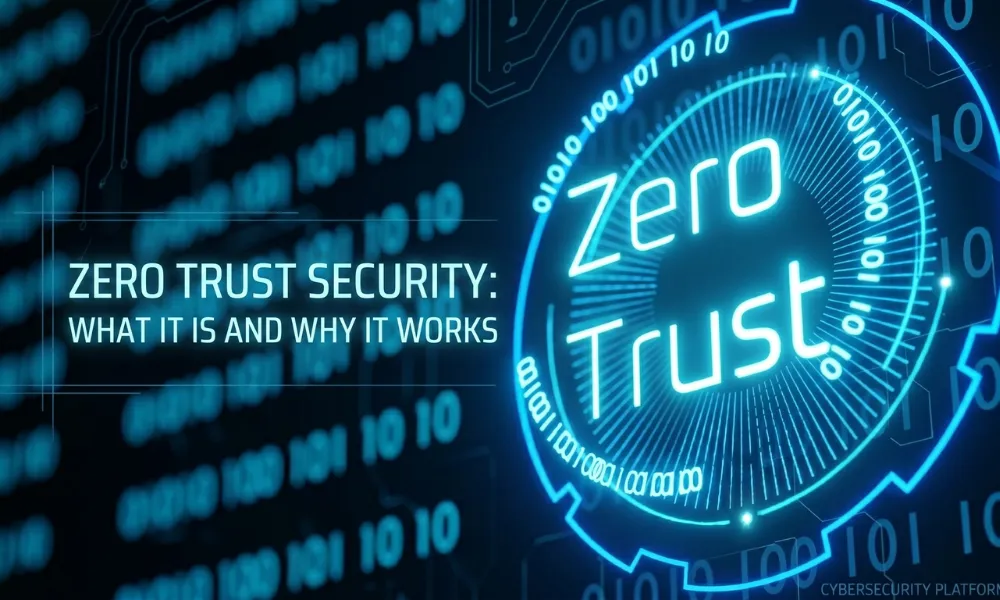
Zero trust is based on a very simple idea. Do not trust anyone by default. Every user, device, and connection has to prove they should have access, every single time.
The uncomfortable part is this. Most breaches do not begin with an outsider forcing their way in. They begin with someone already inside, using a valid login and moving through systems without being noticed.
And by the time it is detected, the damage is usually already done. That is the problem zero trust is trying to solve, and why more organizations are starting to rethink how they protect what matters.
The Old Security Model Is Breaking Down
Traditional security worked like a locked gate around the entire network. Once inside the perimeter, users had free access to the network. Attackers discovered this weakness quickly and started exploiting stolen credentials at scale.
Remote work then shattered what was left of the perimeter model completely. Workers started accessing systems from their own devices, networks, and public Wi-Fi. T The traditional boundary that security teams once relied on effectively stopped existing.
What Is Zero Trust Security Exactly?
Every connection is viewed as a possible threat by zero-trust security until it is shown to be secure. Based only on network location, no person or device is automatically granted access. Every request gets authenticated and authorized before any resource becomes accessible.
The framework was first introduced by Forrester analyst John Kindervag back in 2010. Since then, it has grown into a widely adopted security architecture for modern organizations. It is not a single product but a comprehensive strategy built on layered controls.
The Core Principles That Power Zero Trust
Three foundational principles define how zero-trust security operates in real environments. The first is least privilege access, which limits permissions to only what each role requires. The second is micro-segmentation, which breaks networks into smaller, isolated zones across environments.
Segmentation stops attackers from moving laterally after breaking through an initial entry point. The third is continuous verification, meaning access is re-evaluated constantly based on ongoing behavior signals. All three principles work together to make the attack surface far smaller.
How Zero Trust Gets Implemented Step by Step
Every zero-trust implementation starts with establishing strong identity and access management. Multi-factor authentication immediately eliminates the risk of password-only access across systems. Organizations then define precise policies around who accesses what and under which conditions.
Monitoring and behavioral analysis layer on top of access controls from day one. This is exactly where AI Automation in IT Operations helps security teams work faster and smarter. Automated systems process thousands of signals that no human team could realistically handle alone.
Why Cloud Environments Need Zero Trust Built In
Cloud migration pushed zero-trust security from a best practice into an urgent necessity. Traditional VPNs and firewalls were never designed to handle distributed cloud workloads. In cloud environments, identity replaces location as the primary security boundary for access.
Data moves constantly between applications, users, and regions with very little natural visibility. Cloud Infrastructure Services designed around zero trust principles embed security into the environment from the start. That approach eliminates the gap between cloud growth and security coverage.
Zero Trust Requires Ongoing Commitment, Not a One-Time Setup
Zero trust security is a continuous security posture rather than a completed installation. Threats evolve constantly, and access policies need to reflect that reality on a regular basis. Organizations start small, usually with identity controls, and expand the framework from there.
Each phase of adoption brings stronger protection and better visibility across the entire environment. Teams that treat zero trust as an evolving program consistently get far better results over time. Partnering with Advanced Cybersecurity Services helps organizations build programs that stay current with real threats.
Who Should Start Moving Toward Zero Trust Right Now?
Zero-trust security is not something only large enterprises need to lose sleep over. Mid-sized businesses sit on plenty of valuable data, and most of them are running security postures that would not hold up under serious pressure. Attackers know this better than anyone.
A mid-sized company is often the sweeter target because the data is worth taking and the defenses are easier to work around. Any business running remote workforces, cloud applications, or third-party vendor access carries meaningful exposure.
Modern security tools have made zero trust far more accessible than it was even three years ago. Starting with the right strategy makes a bigger difference than starting with the most expensive tools.
AI4IT builds practical zero-trust strategies aligned to how organizations actually operate day to day. The team helps businesses move from security risk to measurable, sustainable security confidence.
Explore structured security solutions built for real-world environments at AI4IT Services.
FAQs
What is zero-trust security in simple terms?
Zero-trust security is a framework that verifies every access request before granting it. No user or device is ever trusted automatically by default.
Is zero-trust security only for large enterprises?
No, mid-sized organizations are increasingly targeted because they hold valuable data. Zero trust is now accessible to businesses operating at every scale.
How does zero trust relate to cloud security?
Cloud environments have no fixed perimeter, making identity the only reliable access boundary. Zero trust fits cloud security naturally because it verifies context over location.
What is the difference between zero trust and a VPN?
A VPN grants broad network access after a single successful connection is made. Zero trust grants access only to specific resources after continuous ongoing verification.
How long does it take to implement zero trust?
Most organizations begin with identity controls and expand the program gradually over time. Meaningful security improvements appear even during the earliest stages of adoption.
What is least privilege access in zero trust?
Least privilege access gives every user the minimum permissions their specific role requires. It limits damage significantly if any credentials are ever compromised.