



Most business owners only think about IT when something breaks, and by then the damage is usually done. A server crashes, files vanish, and someone is stuck on hold with tech support while the whole office waits around doing nothing.
That’s the problem a lot of companies run into, and it’s an expensive one. The fix isn’t complicated though: hire a managed service provider to watch over systems, patch weak spots, and catch trouble before it spreads.
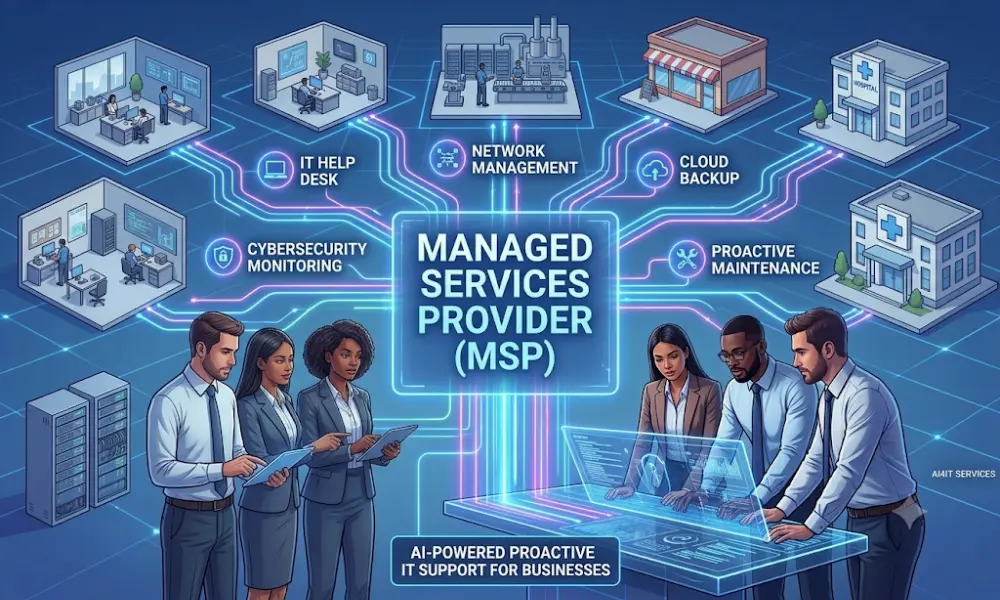
So, what is an MSP, really? It’s a company that takes ownership of a business’s IT, from security to daily maintenance, instead of showing up only after something fails.
Companies that switch to this setup tend to see fewer outages and lower repair bills over time, and the results back it up. Curious how handing off tech headaches to one team could actually change the way a business runs day to day?
What Is an MSP, Exactly
An MSP, or managed service provider, basically takes over the technology side of a business so nobody has to babysit it.
It keeps an eye on networks, pushes out software updates, and handles cloud systems in the background, often without anyone even noticing it’s happening.
Instead of waiting around for something to go wrong, the whole point is stopping problems before they start. That approach has caught on fast.
The global managed services market is expected to cross $430 billion in 2026, and it keeps growing every year as more companies realize doing IT alone just isn’t practical anymore.
What Does an MSP Actually Do
An MSP wears a lot of hats, which is honestly the appeal for most businesses. Instead of hiring five different specialists, one provider covers it all. Typical responsibilities include:
Network monitoring and help desk support Cloud hosting, migration, and backups Cybersecurity monitoring and quick threat response Patch management and routine updates Disaster recovery planning
Having all of this handled by one team means fewer vendors to chase down and fewer surprise bills. Flat monthly pricing also makes budgeting a lot less painful than paying for emergency fixes whenever something breaks.
Why Businesses Turn to Managed IT Services
Cost is usually what gets people interested at first, but it’s rarely the only reason they stick around. Building a full IT department from scratch is pricey, and even a skilled small team can struggle to keep up with everything an outside provider handles daily.
Managed IT services also free staff up to actually focus on the business instead of fighting with printers or renewing licenses nobody remembers buying.
Security matters here too. Providers that handle Compliance & Governance already know regulations like HIPAA and GDPR cold, which saves businesses from mistakes that could otherwise get expensive fast.
MSP vs. Traditional IT Support
Old school break fix support only shows up once something has already stopped working, and it bills by the hour with zero long term plan. An MSP works differently, catching small issues before they turn into real outages.
Networking is a good example of this in action. Outdated wiring or weak Wi-Fi can quietly slow an entire office down, and most people never figure out why.
Providers offering Modern Networking Services rebuild that foundation so connectivity actually keeps up with how the business operates now, not how it operated five years ago.
Benefits of Working with an MSP
Working with an MSP brings a lot more to the table than just fewer tech complaints. Businesses get access to specialists they’d never afford to hire full time.
Downtime tends to drop noticeably since problems get caught through constant monitoring instead of after someone complains.
Backups get tested regularly too, so recovery plans actually work when they’re needed instead of failing at the worst possible moment. And maybe the biggest win: internal staff finally get breathing room to work on things that actually grow the business.
Industries That Rely on MSPs Most
Some industries lean on MSPs harder than others simply because their data carries more risk. Healthcare providers need constant uptime along with strict patient data protection.
Legal firms can’t afford leaks, so airtight confidentiality is non negotiable. Financial companies need fraud monitoring running nonstop, no exceptions.
Retail and ecommerce businesses need networks that hold up during busy shopping seasons without buckling. Different industries, same underlying need: less downtime, tighter security, fewer headaches.
How Much Does an MSP Cost
Pricing shifts depending on company size, device count, and how much support is actually needed. Most providers charge a flat fee per user or per device instead of billing by the hour.
That subscription style setup makes monthly budgeting far more predictable. Some MSPs offer tiered plans too, letting smaller businesses start simple and add security or cloud services later as needs grow.
Comparing a few quotes usually gives a decent sense of fair market pricing pretty quickly.
Choosing the Right Managed Service Provider
Not every MSP runs things the same way, so a bit of homework goes a long way before signing anything. Response times, certifications, and clear pricing all deserve a closer look.
A provider that already works with a specific industry, say legal or healthcare, tends to understand compliance details that a generalist might completely miss.
Scalability matters too, since a growing business needs a partner who can grow with it instead of forcing a renegotiation every few months.
Businesses looking for reliable support across compliance, networking, and everyday IT needs can reach out to AI4IT Services for a straightforward, no pressure conversation.