

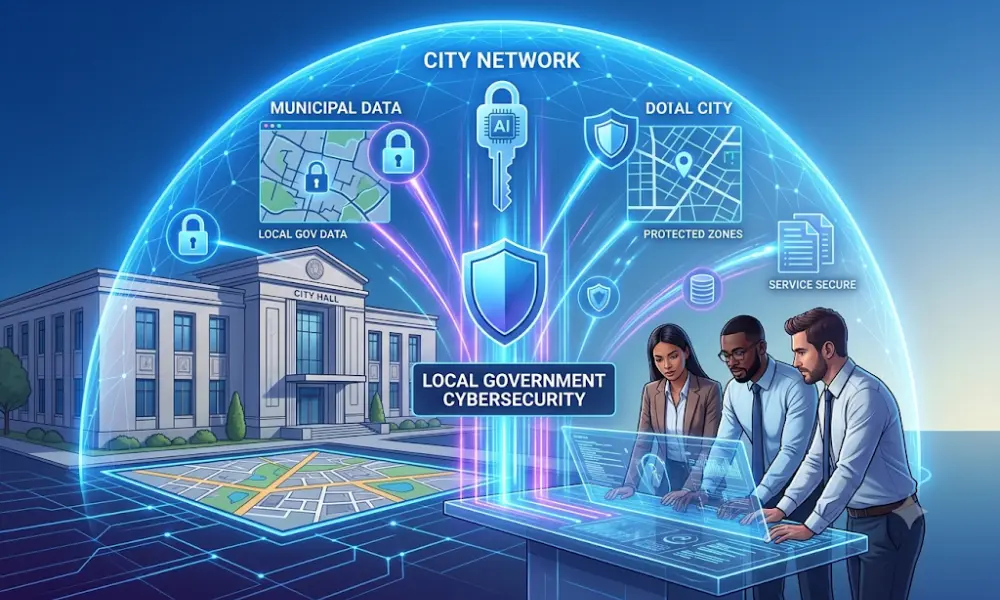
A ransomware attack doesn’t care that a county office is small or underfunded. It just wants a way in, and local governments hand out more of those than almost anyone realizes.
Public records, tax systems, and court files can get locked up overnight, and suddenly a town of 40,000 people can’t process a permit or answer a 911 dispatch properly.
Cybersecurity for local government covers exactly this: the everyday protections that keep municipal systems running when someone tries to break them. The agencies that take it seriously recover in days.
The ones that don’t can spend months digging out, and last year alone, ransomware attacks on local governments rose 65 percent. So, what’s actually different about the ones that get back on their feet fast?
Why These Attacks Keep Happening Here
It’s not bad luck. Municipal networks sit on a pile of valuable data, including tax records, voter rolls, and court documents, protected by budgets that were tight a decade ago and haven’t grown much since.
Attackers notice this. Old software, reused passwords, and systems nobody’s patched in years are the terrain they’re used to working in, and it’s an easy one for them.
Where the Doors Are Actually Left Open
Most breaches trace back to the same handful of things. Someone’s password gets guessed. A remote access tool installed years ago is still running, unmonitored, because nobody remembered to check on it.
A vendor with network access never got properly vetted. Add weak login protection and thin activity logs, and there’s a pretty clear picture of how attackers get in. It’s rarely anything exotic.
What an Actual Security Plan Looks Like
Buying five different tools and hoping they cover everything doesn’t work. It just creates gaps between them that nobody’s watching.
A real plan starts with knowing what’s actually running on the network, then fixing what’s riskiest first. Smaller towns are usually better off bringing in outside help rather than trying to staff this alone.
Advanced Cybersecurity Services gives IT teams that kind of backup, including monitoring, response planning, and compliance support, without needing to build an entire department from nothing.
Why Automation Matters More Than People Expect
A two person IT team can’t watch thousands of alerts a day. It’s not a staffing failure, it’s just math.
This is where automation actually earns its place, flagging odd logins, isolating a compromised device, and cutting through the noise faster than any person scanning a dashboard could manage alone.
AI Automation in IT Operations is what turns that constant flood of alerts into something a small team can actually keep up with.
The Cost of Putting This Off
Skipping security upgrades feels like saving money right now. It rarely is. A breach can shut down services, frustrate residents, and disrupt daily operations.
It can also cost far more than prevention, with government data breaches averaging nearly $3 million each. Waiting for next year’s budget cycle often just means paying more later.
What Actually Helps
None of this requires a massive budget overnight. Turning on two factor login everywhere closes one of the biggest gaps immediately.
Running a phishing test every few months keeps staff sharp. Checking on vendor access twice a year catches problems before they spread. None of it is glamorous, but it adds up over time.
For agencies still running on patch it when it breaks mode, a proper security assessment is worth booking now, not after the next incident forces the conversation.
Where This Leaves Things
Budgets aren’t getting bigger and threats aren’t slowing down. But the agencies treating security as routine, not a one time project, are consistently the ones that shrug off attacks instead of making headlines over them. Cybersecurity for local government isn’t a nice to have anymore. It’s infrastructure, same as the roads